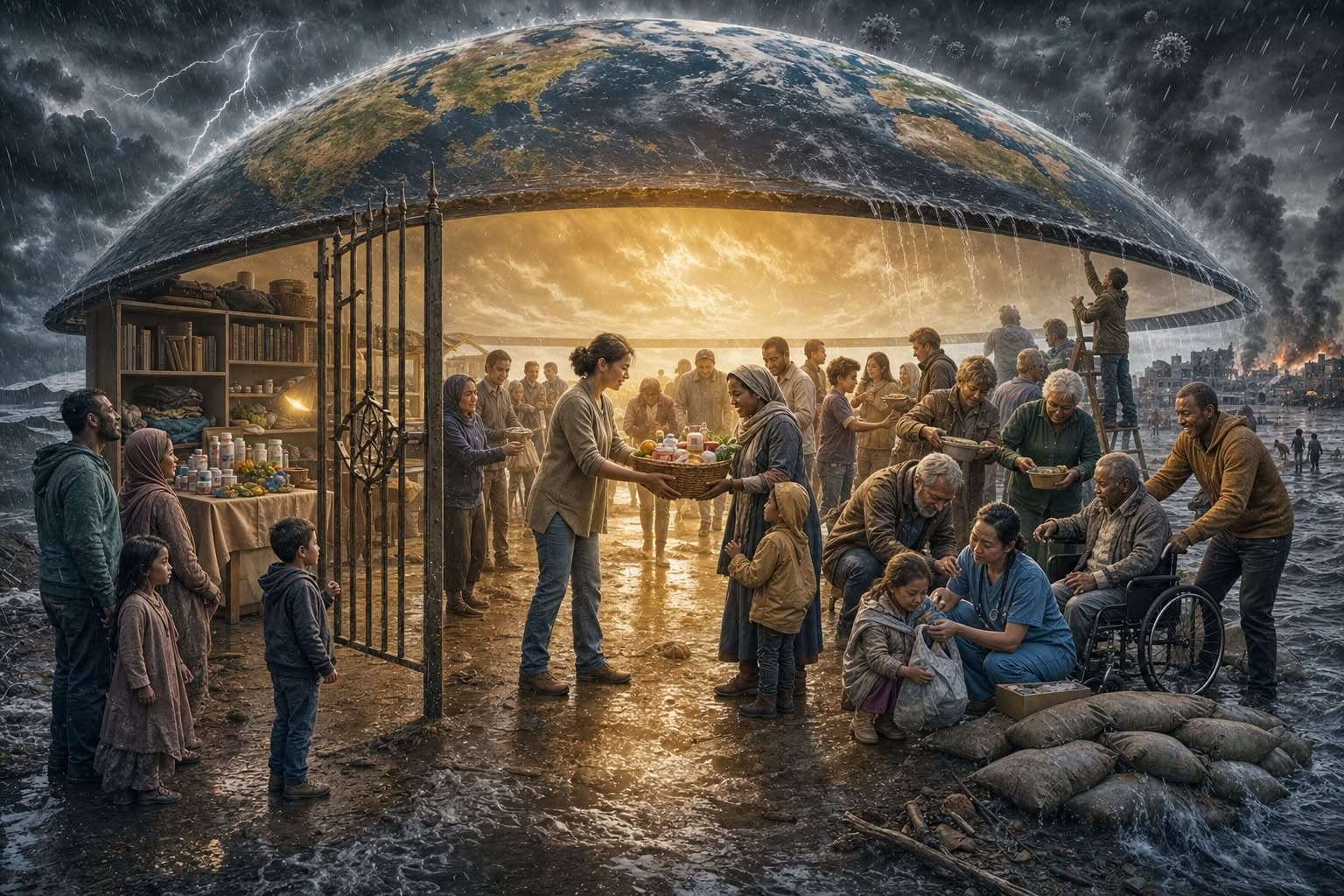
Some areas of human life are considered personal or private. Our money, homes, belongings, relationships, and personal information belong to us, and we generally have the right to decide whether, when, and with whom we will share them.
We often speak of “my money,” “my home,” “my property,” and “my belongings.” Unless there is a legal or moral obligation, no one can ordinarily force us to share these things. We may choose to share them only with members of our families, close friends, or people we trust. We may also decide not to share them at all.
It Is Not Private
However, other aspects of life are shared by everyone, whether we choose to share them or not. We receive them simply because we live together in the same world.
The air we breathe, the warmth of the sun, the rain, rivers, seas, and many other gifts of nature are not created by any one person. They support the lives of the rich and the poor, the powerful and the powerless, humans and other living creatures.
Although people may attempt to control access to natural resources, no individual created the earth or can claim complete ownership of everything it provides. It is meant for us all, regardless of who we are.
Unintentional Sharing
Unfortunately, we also share the world’s suffering without being asked for permission. Disease, natural disasters, war, violence, economic crises, and environmental dangers can cross the boundaries people have established among themselves. These troubles do not always ask about our wealth, nationality, religion, political beliefs, or social position before affecting us.
No one willingly chose COVID-19, yet it affected people throughout the world. Rich and poor became sick. Families lost loved ones, businesses were disrupted, schools were closed, and communities experienced fear and isolation. Some people had greater protection and access to medical care than others, but no country or social class remained completely untouched.
War and Its Outcome
The same is true of war. Most people do not participate in the decisions that begin wars, yet millions experience the consequences of war.
Families lose loved ones, innocent people are displaced, food and energy prices increase, trade is interrupted, and fear spreads far beyond the battlefield. A conflict beginning in one part of the world and decided by a small number of people can affect millions of people living thousands of miles away.
We may refuse to share our money with a person in need, but we cannot always refuse to share the consequences of human actions. We may keep our food, property, knowledge, and opportunities to ourselves, yet we cannot completely separate ourselves from disease, violence, environmental destruction, or economic instability.
This creates a painful contradiction: We hesitate to share the good things of life voluntarily, but we are forced to share suffering involuntarily.
Why do we live with this contradiction? Is it fair for us to protect our blessings as though they belong to us alone while expecting others to help us when suffering enters our lives?
Humanity Under One Roof
Consider a family living together under one roof. Family members share food, responsibilities, expenses, and daily work. Each person contributes according to his or her ability. When one family member faces a serious need, the others offer assistance. When someone becomes sick, the family provides care and seeks appropriate treatment. When the household experiences hardship, everyone is affected in some way.
A healthy family does not say, “Your suffering belongs only to you.” Its members understand that one person’s pain can affect the entire household.
Similarly, all human beings live under one great roof—the earth. We may live far from one another and differ in color, ethnicity, language, religion, culture, political system, and economic condition. Some nations are large and powerful, while others are small. Some are wealthy, while others struggle with poverty. Nevertheless, we all inhabit the same earth and depend upon its resources.
Our lives are also connected through human labor and knowledge. The food we eat, the clothing we wear, the technology we use, the medicine we receive, and the transportation we depend upon are often produced through the contributions of people in many different places. Even when we do not see them, we benefit from the labor, knowledge, sacrifice, and creativity of others.
This does not mean that personal ownership and privacy have no value. People need personal space, security, responsibility, and the freedom to care for their families. However, ownership should never make us forget our dependence upon one another.
What we possess did not come through our efforts alone. We have all benefited from the natural world and from the work of other people. Therefore, we should see our blessings not only as private possessions but also as opportunities to serve.
Our Personal Responsibility
We should not place the entire responsibility upon billionaires, governments, corporations, or political leaders. Those who possess greater wealth and power certainly carry greater responsibility, but every person can either reduce suffering or contribute to it.
When we allow hatred to grow in our hearts, we begin a small war within our relationships and communities. When we refuse to forgive, we extend conflict. When we spread false information, encourage division, or treat others as enemies, we contribute to the suffering of the world.
The size of the gift is not the most important matter. What matters is our willingness to recognize that another person’s well-being is connected to our own.
If humanity must share suffering, should we not also become more willing to share blessings?
The question is: What is my contribution toward reducing the suffering of the world in all its aspects?